Welcome to Diana's Blog

I blog about anything that interests me - my local area, things I've seen or heard on the news, politics and human rights, gardening, arts and crafts, poetry, photographs and general advice.

And, when you've finished reading, don't forget to leave a comment - I love hearing from people


Showing posts with label politics. Show all posts

Saturday, 2 January 2016

John Parker's Guest Blog October 7th 2014 T05:14:24.366-07:00 - Is this still relevant on January 2nd 2016?

Is the Spanish Street Protest the Start of the Broad Masses of the World Confronting Global Capitalism?

 Spanish students have taken over a square in Madrid - hopefully this will be the start of the Western World telling the banking institutions and the IMF that the broad masses are not going to pay for their bungling greed, and that the broad masses are going to tell the bnanking systems and their representatives that the slate should be wiped clean and that the banking systems will all start again from scratch.


What they are saying on their placards is that they are not going to pay, but Spain on its own could not achieve that without global capitalism.

The banks say we're broke, you bailed us out.  We've taken your money and you will now have to be poor for another decade, but we'll still pay ourselves bonuses out of your money.

The demonstators in  Madrid hopefully will be followed by the rest of the Western broad mass of people and none of us will suffer for the banks' greed and bungling.

Spain, Greece and France are all shouting, but not together - it needs at least the Western European countries to be really demonstrating together and to tell the large corporations and their bganking stystems that we're not going to pay for their greed and mistakes, and hopefully the American people as well.

This happened in Central America, when Cuba led the Central American countries and told the IMF clearly that they were not paying, in the early 80's.  And it was very funny because the IMF said"you've got to pay - have some more money from us so that you can do so."  Then everything fell silent.

What are we to read into it?  That the IMF didn't want other poor countries following suit?

They offered to lend the Cubans more money in order for the Cubans to keep up with their payments.  We don't know whether Cuba accepted the money or not, because everything went silent.  If Cuba had indeed borrowed more money, they would not have been able to repay it.  The whole situation is ridiculous, because if they can't pay money that they owe, why lend them more?  Only to prop up Capitalism which had collapsed.

We have never heard anything about it since then and don't know whether the Cuban debt was written off or not. A UK representative was at the IMF talks, but the Public weren't told of the outcome.

The reason we are currently in debt is because the financial institutions are lending the broad masses more when they can't repay it.  It is a mere pretence of paying.

The IMF is like a bank, and the countries are like the bank customers.  The countries are run and owned by large corporations and we don't have a say about how our financial affairs are run.  But, for the first time, we see Western people - the Spanish unemployed - saying "we're not paying!"

For Spain to win, all the other countries would have to follow suit. I wonder what would happen - would it be like Cuba in the 1980's?  Because of the silence, we don't know what happened. Would it be "Don't give us more money, we'll give you more money so that you can continue to pay us", or would the debt be written
 off?

How Relevant is this Article at the Beginning of 2016?


Tuesday, 14 July 2015

The Greek Bailout Explained


(A jolly little piece which is currently doing the rounds on the Internet)


It is a slow day in a little Greek Village. The rain is beating down and the streets are deserted.


Times are tough, everybody is in debt, and everybody lives on credit.


On this particular day a rich German tourist is driving through the village, stops at the local hotel and lays a €100 note on the desk, telling the hotel owner he wants to inspect the rooms upstairs in order to pick one to spend the night.


The owner gives him some keys and, as soon as the visitor has walked upstairs, the hotelier grabs the €100 note and runs next door to pay his debt to the butcher.


The butcher takes the €100 note and runs down the street to repay his debt to the pig farmer.


The pig farmer takes the €100 note and heads off to pay his bill at the supplier of feed and fuel.


The guy at the Farmers' Co-op takes the €100 note and runs to pay his drinks bill at the taverna.


The publican slips the money along to the local prostitute drinking at the bar, who has also been facing hard times and has had to offer him "services" on credit.


The hooker then rushes to the hotel and pays off her room bill to the hotel owner with the €100 note.


The hotel proprietor then places the €100 note back on the counter so the rich traveller will not suspect anything.


At that moment the traveller comes down the stairs, picks up the €100 note, states that the rooms are not satisfactory,   pockets the money, and leaves town.

No one produced anything.

No one earned anything.

However, the whole village is now out of debt and looking to the future with a lot more optimism.


And that is how the bailout package works!


Saturday, 24 May 2014

Women's Rights in Afghanistan

What is it Like to be a Woman in Afghanistan?
                                                                                 

Image: BBC News - South Asia

We all hear snippets of news about how women are treated in Afghanistan, and a little about women's rights in that part of the world, but it was only when I read A Thousand Splendid Suns by Khaled Hosseini that I really began to realize the full horror of what it was like to be a woman in a culture which values women merely as child-bearing slaves.

 It would not be unreasonable to say that, by Western standards, women's rights in most of Afghanistan are precarious or non-existent.

 Women must obey their husbands, and all the males in their household, including younger brothers.  Even boys treat their mothers in ways which we would consider disrespectful.


Domestic violence (one-way naturally) is normal.  It is not illegal for the men of the household to beat a woman by way of chastisement if she does not do as they wish, and sometimes even the woman's mother-in-law will join in to beat and punish her .  There is no such concept as marital rape, and women do not have any say in the mode or frequency of sex. Basically she is treated as a slave, to do the housework, and to do what her husband and his family tell her to do.  Before marriage, she must obey the males in her household.

In some communities, an Afghan woman must not be seen outside the home without being covered with a burkha from head to toe including her mouth, and nose.  In some cases even her eyes are covered by gauze so that they can't be seen.  Imagine having to walk around in temperatures soaring above 100 degrees muffled up like that so that you don’t attract men's attention and arouse their evil desires. It makes you wonder what sort of animals the men must be if the mere sight of a woman's nose is sufficient to ignite uncontrollable passions. It brings to mind something Golda Meir said many years ago, that if men can't control themselves when they see a woman, it should be the men who are put under curfew, not the women. 

Afghan women must not talk to strange men or any male who is not part of their family, and, of course, must never have physical contact with any man to whom she is not married.

Even if she treads carefully and conducts herself according to the morality of the society in which she lives, the Afghan woman is still likely to be subjected to beatings, but would normally avoid serious injury, such as public stoning, and public whipping,
judicially decreed by the local mullah, not to mention  assault by family members such as having boiling water or acid thrown over her. 

Oh, and I almost forgot – if an Afghan woman brings shame on her family, by refusing to marry the man chosen for her or to whom she has been sold or exchanged for land or other favors,  or if she has a relationship with a man, or behaves in any way which could be viewed as unseemly, her own family might feel morally bound to murder her. Quaintly enough, this would be considered to be an honour killing and would be socially acceptable.


Three thought-provoking films from YouTube about what it’s like to be a woman in Afghanistan.


Wednesday, 28 March 2012

The Spanish Demonstration in Madrid - May 2011

A Guest Blog by John Parker Written in May 2011

Of course, since then, we've had the Greek Bail-Outs, but this is an interesting view,  interesting because we see history repeating itself over and over again.

"Is the Spanish Street Protest the Start of the Broad Masses of the World Confronting Global Capitalism?

Spanish students have taken over a square in Madrid - hopefully this will be the start of the Western World telling the banking institutions and the IMF that the broad masses are not going to pay for their bungling greed, and that the broad masses are going to tell the banking systems and their representatives that the slate should be wiped clean and that the banking systems will all start again from scratch.


What they are saying on their placards is that they are not going to pay, but Spain on its own could not achieve that without global capitalism.


The banks say we're broke, you bailed us out.  We've taken your money and you will now have to be poor for another decade, but we'll still pay ourselves bonuses out of your money.


The demonstators in  Madrid hopefully will be followed by the rest of the Western broad mass of people and none of us will suffer for the banks' greed and bungling.


Spain, Greece and France are all shouting, but not together - it needs at least the Western European countries to be really demonstrating together and to tell the large corporations and their bganking stystems that we're not going to pay for their greed and mistakes, and hopefully the American people as well.


This happened in Central America, when Cuba led the Central American countries and told the IMF clearly that they were not paying, in the early 80's.  And it was very funny because the IMF said"you've got to pay - have some more money from us so that you can do so."  Then everything fell silent.


What are we to read into it?  That the IMF didn't want other poor countries following suit?


They offered to lend the Cubans more money in order for the Cubans to keep up with their payments.  We don't know whether Cuba accepted the money or not, because everything went silent.  If Cuba had indeed borrowed more money, they would not have been able to repay it.  The whole situation is ridiculous, because if they can't pay money that they owe, why lend them more?  Only to prop up Capitalism which had collapsed.


We have never heard anything about it since then and don't know whether the Cuban debt was written off or not. A UK representative was at the IMF talks, but the Public weren't told of the outcome.


The reason we are currently in debt is because the financial institutions are lending the broad masses more when they can't repay it.  It is a mere pretence of paying.


The IMF is like a bank, and the countries are like the bank customers.  The countries are run and owned by large corporations and we don't have a say about how our financial affairs are run.  But, for the first time, we see Western people - the Spanish unemployed - saying "we're not paying!"


For Spain to win, all the other countries would have to follow suit. I wonder what would happen - would it be like Cuba in the 1980's?  Because of the silence, we don't know what happened. Would it be "Don't give us more money, we'll give you more money so that you can continue to pay us", or would the debt be written off?"

Wednesday, 16 November 2011

Snow - by Orhan Pamuk

This book is about a poet, Ka, who is also an investigative journalist. He is stranded in a snowbound small town for an eventful few days to learn about the mysterious suicides of young women who have been obliged under the laws of Secular Turkey to remove their veils. The book is poetic, dreamy, atmospheric, exciting, political, and very informative about the ideological cross-currents in modern Turkey.

I was captivated right from the start by the sheer poetry and competence of the writing, which shone through the sensitive translation by Maureen Feely.

There is a love story interwoven with a tale of political unrest, and an exploration of the contrasting attitudes of secular society in Turkey and Muslim fundamentalists, culminating in violent action.

The viewpoints of the characters are revealed sympathetically and non-judgmentally, giving an insight into the problems of the warring factions in modern Turkey, which, under the auspices of Ataturk, became a secular state in the 1920's.

Wednesday, 2 November 2011

Climate Change - Copenhagen Convention and Beyond

What Did the Day of Action on 12th December 2009 during the Copenhagen Meeting of World Leaders about Climate Change Achieve ?

The outcome of the Copenhagen Convention 2009, discussion,links to news items, a poll and a debate and even some music

Monday, 15 August 2011

London Riots

I live in one of the troubled areas - Haringey.

Interesting to note that in our area the riots do not have a racial connotation, though this might be the case out of London, where the far right are involved.

But there is a lot of knife and gun crime, and the riots started because the police didn't explain or justify their action in shooting dead an Afro-Caribbean man. They said he shot first, but it has now transpired that all of the shots came from the police, although they say he threatened them first.Well it might be and it might not be - I would tend to suspend my judgment until the outcome of the independent inquiry. And whatever that is, there was no call to burn shops and homes in their own area and make 60 people homeless.

Our main worry here is keeping the teenage boys in our family out of trouble, but so far so good.

Tuesday, 9 August 2011

There is a context to London's riots that can't be ignored - Article in The Guardian

This is a wise and thoughtful article: You can hover over the title above or the link below to read the full article.

http://www.guardian.co.uk/commentisfree/2011/aug/08/context-london-riots?commentpage=1

So much has been written, but this is a particularly good article from The Guardian, followed by some interesting comments - in the end, it's hard to know what to think, there are so many conflicting views. http://amplify.com/u/a1aep4

You might like to read my own comments here:London Riots

Food for thought in this Guardian article http://amplify.com/u/a1aep4

Monday, 8 August 2011

Riots in Tottenham, in the London Borough of Haringey: See the photo link:

Tottenham Riots, London 5th August 2011

IMG_9756 | Flickr - Photo Sharing!
I'd like to post the actual photo on this page, but I can't because it's copyrighted, but well worth a look.

Such a beautiful Art Deco building with a carpet shop below and flats above wiped off the face of Tottenham High Road. People made homeless, jobs lost, and for what? - What idiots destroy their own community? I don't think this is anything to do with Mark Duggan's shooting - why would you burn your own shopping centre because you're cross? What would it prove?

Am I missing something?

I've lived in Haringey for 50 years, and this makes me feel very sad, because so much effort and money has gone into regeneration of the area since the Broadwater Farm incident 25 years ago, when an unarmed policeman was hacked to death with machetes during a riot. At that time, rioting got out of hand because many of the local youth were angered by the local police policy of "Stop and Search", when the police had a legal right to stop and search anyone they suspected of committing an offence. And the black community in Tottenham felt that they were being unjustly targetted.

After that, a huge effort was made to change policing, to employ more black police, have local community liaison committees and so forth; money was poured in to the bleak concrete jungle which was Broadwater Farm Estate, and much was done to make it more of a supportive community, with a community centre, and planting of trees and other cosmetic effects to make the occupants feel less alienated from society.

For years Haringey has had one of the highest council taxes in Britain, and this was to improve the lives of those living in the poorest part of the Borough. I believed in this Socialist principle, so didn't really resent paying high local taxes (just some of the wastefulness that went with it!).

Schools were improved, the whole Borough of Haringey was "greened up", with tree and garden planting, cleaning up areas where there had been fly-tipping, better street cleaning, better street lighting, improved, cleaner local parks, better sports facilities and good library facilities. There were "inclusive" policies, and positive discrimination in employment. There is a huge ethnic mix in Haringey, with something in excess of 100 languages spoken by children in the local schools. Official Local Government information leaflets are normally distributed in about 10 different languages, to help people feel loved and wanted. Many people did feel that things had improved considerably, but the youth unemployment and crime rate, much of it drug-related, remained high.

So why arson - one of the most dangerous offences in the book? In a crowded city like London, it can wreak havoc - and that's why it is a very serious crime - think "Fire of London".

I, for one, certainly don't think pouring a lot more money into Haringey is going to solve this one, because it doesn't seem to have helped much up to now. It seems to me that the people who did this, probably thoughtless youths who don't think beyond their own noses (and certainly not about actions having consequences), should now start to think about pulling themselves up by their bootlaces, like other second-generation immigrant populations before them, instead of behaving badly and then whining about their rights and lack of opportunities.

Saturday, 21 May 2011

Dominique Strauss-Kahn

Dominique Strauss-Kahn resigned from his post as  head of the International Monetary Fund (IMF) after being charged with  attempting to rape a hotel maid.  He has now been released on bail with a condition of residence - basically house arrest.

One thing I don't understand - in England people are presumed innocent until proven guilty. I thought this was the same in USA, and yet he has already been treated like a criminal. Am I missing something?

You might find the following of interest:
Strauss-Kahn – Exerpt from BBC News 18 May

But many commentators, both in France and the US, continue to see the Strauss-Kahn case through the prism of the Polanski saga.

"Prosecutors say, plausibly, that Strauss-Kahn could easily hop on a plane to France and never be extradited and be a whole new… Polanski, over there," wrote Hamilton Nolan on the Gawker website.

Jim Dyer in the New York Times noted French anger at the television footage of the IMF managing director handcuffed in court - and compared it to Polanski's appearances as a free man at the Cannes film festival.

"Year after year, the director Roman Polanski strolled the red carpet, smiling for the cameras, apparently unworried - and rightly so - that the French authorities would notice that he was a fugitive from justice in Los Angeles, where he had drugged, raped and sodomised a 13-year-old girl," he wrote.

He went on: "Mr Polanski… lowered the odds that Mr Strauss-Kahn... will get bail in New York any time soon."

French gloom

Roman Polanski won the Palme D'Or at Cannes in 2002 for The Pianist

In the same newspaper, Stephen Clarke, author of a book, 1,000 Years of Annoying the French, speculated that if Mr Strauss-Kahn were convicted he would "someday return to France, publish his autobiography (which will, of course, be adapted for the big screen by Mr Polanski) and eventually be made a government minister. Minister of gender equality perhaps?"


Tuesday, 22 December 2009

Poem: The Fire at Alexandra Palace


I saw the Palace burning,
Burning, burning,
I saw the Palace burning
Lighting up the sky 
 
A smoke-grey finger swirling
Swirling, swirling
Just glimpsed between the houses
Pointing to the sky

Then crowds of people surging
Surging, surging
To see the flames go licking
Up towards the sky

And scarlet engines racing
Racing, racing
With firebells loudly ringing,
Their clanging filled the sky

Like ants appeared the firemen,
Firemen, firemen
Swarming round the building
Dark forms against the sky

And children rushing forward,
Forward, forward
While policemen barred their progress
As they looked up to the sky

And beams and ashes falling
Falling, falling
Made everyone step backwards
As they watched the darkening sky

And now the wind was blowing
Blowing, blowing
And flames and smoke now billowed
In their race to meet the sky

And fiercely sprayed the water,
Water, water
As the firemen turned their hoses
Up towards the sky

Then home we turned, exhausted,
Exhausted, exhausted
The fire raged ever fiercer
And lit the dusky sky

The blaze was like a beacon
Beacon, beacon
All London saw it burning
Till dawn suffused the sky
       Then Lloyds paid out eight million                                   £8,000,000
       Eight million, eight million
       And the Owners were so happy                                     
       Their insurance was sky high                                   

Diana Grant


                 (c)

Saturday, 12 December 2009

Copenhagen - Candlelit Vigil Across the World

       Copenhagen


Let your candles burn tonight
The world needs our support


Let your candles shine so bright
Our leaders need support


It’s our job to spread the light
The world’s poor need support


Keep your candles glowing white
Our children need support

Add your voice to the climate fight
Our wildlife needs support


Hope and pray with all your might
The world will give support


As people round the world unite
And join in their support

Hold the ideal in your sight
Hold your intention really tight
And as our candles burn tonight
Light up the world with gentle light


.....Copenhagen


Wendy Beauchamp-Ward             12 December 2009

Monday, 9 November 2009

Legally Compromised Computer Security

In my last blog, I ended by saying I would tell you what I had found out whilst I was researching Norton 360. To me what I discovered was a bit of a bombshell, but really, knowing the wily ways of the world, it should not have been all that surprising, especially having read the sort of books that Chomsky,


Jonathan Bloch have written.


I had innocently looked up Norton 360 Version 3.0 to compare it with Version 2.0 in Wikipedia, which was very helpful.

The next section was entitled "FBI cooperation". In a nutshell, they said that Symantec (Norton), in compliance with the FBI, had whitelisted Magic Lantern, a keylogger developed by the FBI, whose purpose was to obtain passwords to encrypted email, to assist with criminal investigations. Magic Lantern is deployed as an email attachment and when opened, a Trojan horse is installed on the suspect's computer which is activated when PGP encryption is used, which would normally be to increase the email security.

According to the Wiki article, Symantec and some other major antivirus vendors have rendered their own antivirus products incapable of detecting Magic Lantern, giving rise to further concerns that hackers too might be able to subvert the programme for unlawful purposes.

It is not clear whether the FBI is required to obtain a court order before gaining access in this way since the statement of the FBI spokesman Paul Bresson merely stated that "like all technology projects or tools deployed by the FBI it would be used pursuant to the appropriate legal process". To me that does not sound 100% watertight, and it could well be open to subjective interpretation by anyone seeking to use such powers.

Opposing this intentional failure to guard against all malware, The view of Marc Maiffret, chief technical officer and co-founder of eEye Digital Security, was that customers pay for a service to protect them from all forms of malicious code and it is not up to his Security firm to do law enforcement's job for them and so they do not and will not make any exceptions for law enforcement malware or other tools.

And if the FBI has those powers, who else might have them? MI5? Metropolitan Police? And what about the police and spy services in other countries? There seems to be a bit of a moral dilemma here. What do others think?

Wednesday, 27 May 2009

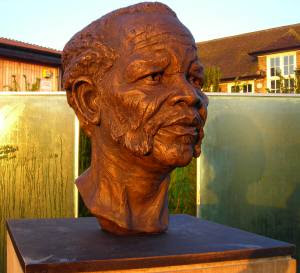
Memorial to Oliver Tambo in Durnsford Road Park, Muswell Hill, London

Oliver Tambo lived with his family in Muswell Hill for many years during his exile from South Africa during the apartheid years.

Here are some photographs of his bust in the park and a few words about him. I got up very early one November morning to get the most spectacular photos I could, just before and after the sun rose as the colour of the bronze changed from dull brown to shimmering gold; and then, in addition, I couldn't resist showing a very chilly Oliver in the snow.


November - a minute before sunrise


The minute of sunrise November Dawn


A cold winter's day

Oliver Tambo, co-founder of modern South Africa, was instrumental in bringing down the apartheid regime from a house in Muswell Hill, North London. He and his former home were recognised in October 2007, when his bust, by the late Ian Walters (who also sculpted the statue of Nelson Mandela in Parliament Square) was unveiled in Durnsford Road Park, and a blue commemoration plaque was placed on his old house.

The three-storey house on the corner of Alexandra Park Road was once, in effect, the home of a government in exile and the children of one of the 20th century’s greatest statesmen used to play in the nearby park where now there is a memorial site with the bust of Oliver Tambo, the co-founder of the modern South African state, who came to London penniless and unknown in 1960, with the police on his tail. His wife Adelaide and young children were smuggled out to join him. The family could not have afforded this large house had it not been for political sympathisers raising the money to provide what was in effect the unofficial London headquarters of the African National Congress.

Oliver Tambo and Nelson Mandela together led their people to freedom. While Mandela was in prison for 27 years for political offences under the old apartheid regime, Tambo was travelling the world as a head of a quasi government in exile. In Muswell Hill a lot of people had never heard of him, and he was remembered by many locally, if at all, as the quietly spoken husband of an NHS nurse who lived with her three children in the big house. Unknown to them, it was a house where the phone was tapped and which attracted many visits from those involved in the anti-apartheid movement.

Nelson Mandela, a fellow lawyer and activist, visited him briefly in 1962. At that time Mandela was unknown, but by the time of Mandela’s second visit just after his release from 27 years’ imprisonment, they were both world leaders.

Over the years Tambo lobbied for international recognition, establishing ANC missions which were shadow embassies for a future South Africa, in 27 countries. He also founded the military wing of the ANC. When the Portuguese empire came to an end in 1975 Tambo moved his guerrillas out of training camps in Tanzania and Zambia into Angola near the South African border as a warning that the ANC were prepared to use force unless the apartheid system was dismantled peacefully. By the mid 1980’s, governments across Europe were in contact with him. The British Thatcher government, however, still considered the ANC to be a terrorist organisation, but eventually at an unofficial meeting with Sir Geoffrey Howe, the foreign secretary, Tambo was able to convince Howe of his serious statesmanlike qualities.

In 1989 Tambo suffered a stroke and, seriously ill, he was warned not to overwork. He returned to South Africa for the ANC’S first legal national conference there, in July 1991 and was elected as its National Chairman, but he died less than two years later barely having time to enjoy the fruits of his hard thirty-year struggle for freedom from apartheid in South Africa
[The source of most of this information is an article by Andy McSmith in The Independent 15 October 2007]

Monday, 25 May 2009

Our lovely MP's

Now that all their shennanigans have come to light how are we to feel confident that our Members of Parliament are working on our behalf and not for their own benefit?


 Well, I am happy to learn that my local  MP for Wood Green, Haringey, Lynne Featherstone, LibDem, has been declared clean by the Daily Telegraph, and she has been claiming somewhat less than most: no mortgage, no second home, no half-baked tricky-dicky expenses. In fact she has behaved as one would expect an MP to behave.


Thanks, Lynne!


Although it might be easy to throw up one's hands and
never vote  again, I do feel people should still vote, and not lose heart entirely, in order to avoid creating a vacuum which would swiftly be filled by fringe candidates with odd ideas, and I leave those ideas to your imagination


........and don't mention Nick Griffin! 


(it's about half-way down that page).